Today is March 23.
I did not update this website for a full year. The main reason was simple: my Windows computer fully crashed. Rebuilding my workflow and website setup on a new machine took a lot of time, so I kept postponing updates.
Only recently, after using AI agent workflows, I remembered: okay, maybe this can be solved much faster now. (ゝ∀・)b
(Also: I did a game festival booth in January and got lots of feedback. I will write that part at the end.)
What I Have Been Doing Recently (Core Systems)
Lately I focused on one thing:
After a goal is completed, how do we close the player's experience loop clearly?
The old chain became too winding. In busy scenes with many people and objects, events interfered with each other. Players could do the right thing and still hesitate:
- “What just happened?”
- “Where should I look now?”
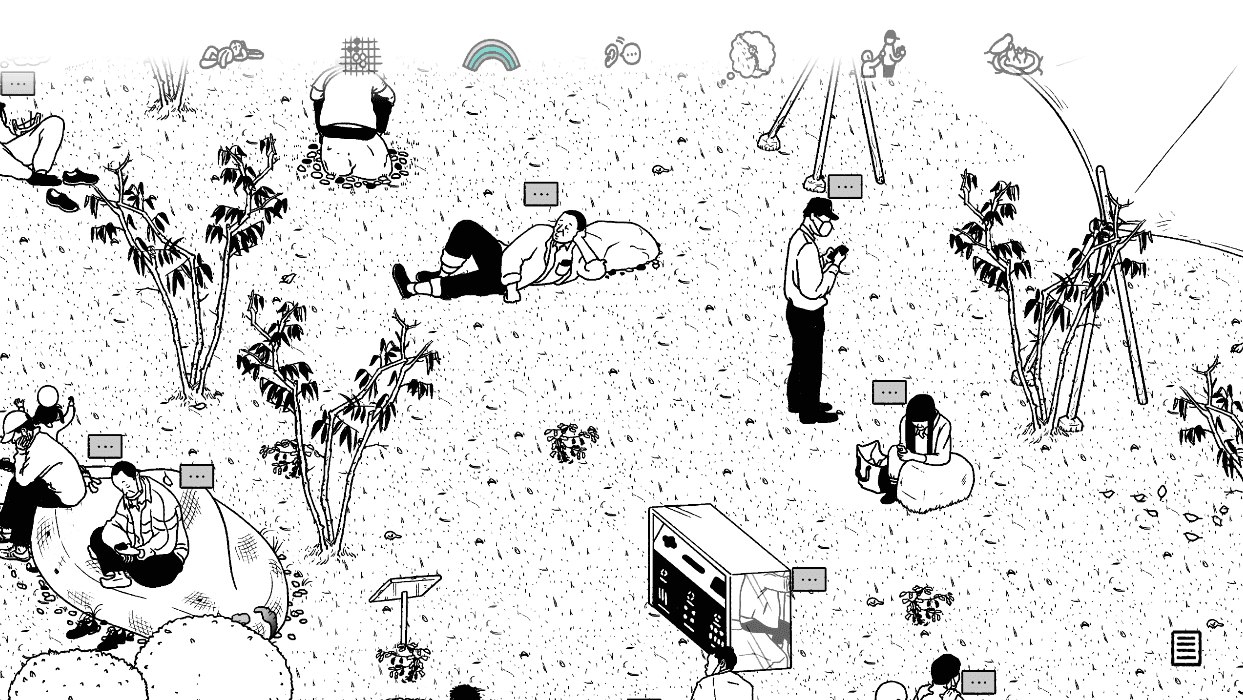
At the same time, I added a protagonist mainline about half a year ago. Without a protagonist, this was an observer-style city exploration. With a protagonist, the game can carry perspective of a specific generation/group/time.
But once that mainline was added, old goal-chain issues became more obvious:
- Why should I care about these people?
- How is this event connected to the protagonist?
(Changes like protagonist arc, apartment page, diary page all had to be considered together.)
The apartment page is currently removed for now:
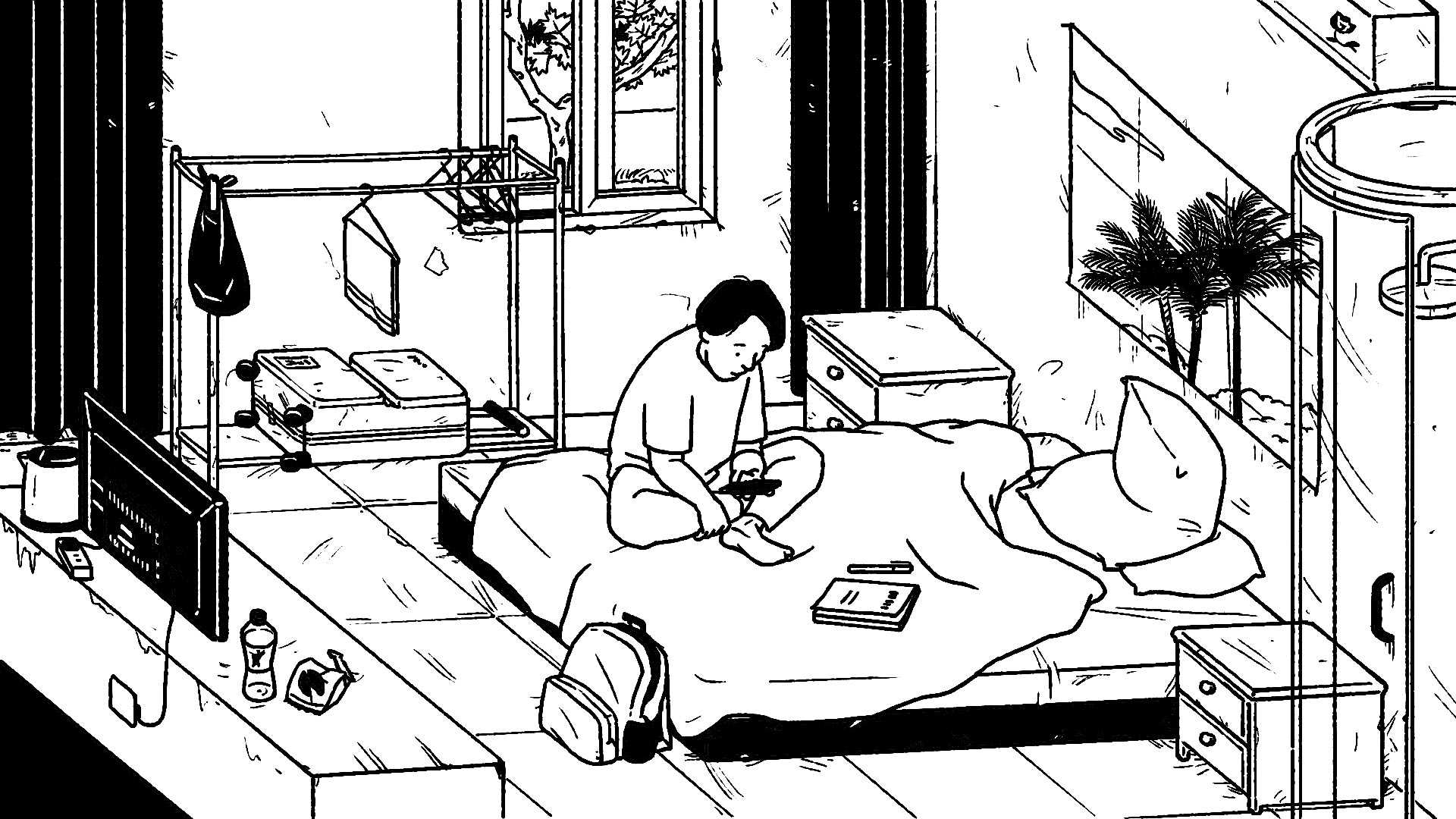
So this time I fully removed the old presentation and replaced it with a clearer notebook-style flow.
After completing a goal, feedback is no longer scattered. It is collected in one readable place, with a rhythm closer to the “protagonist walking through the city” feeling I wanted.
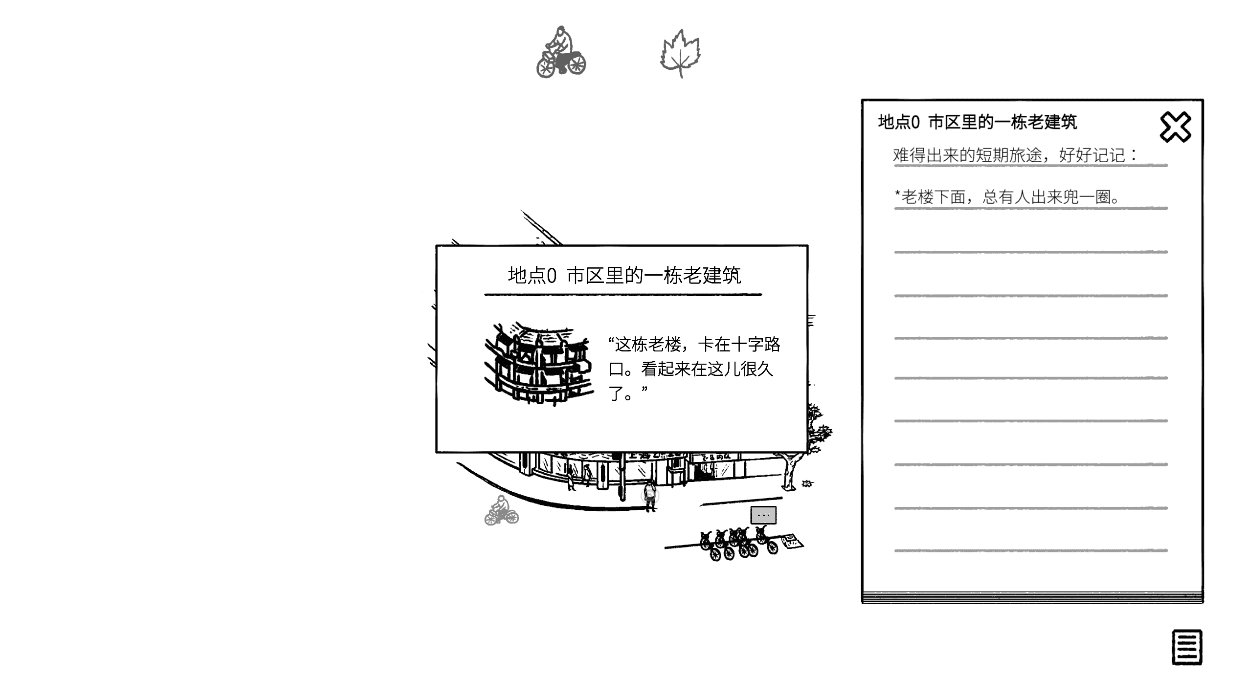
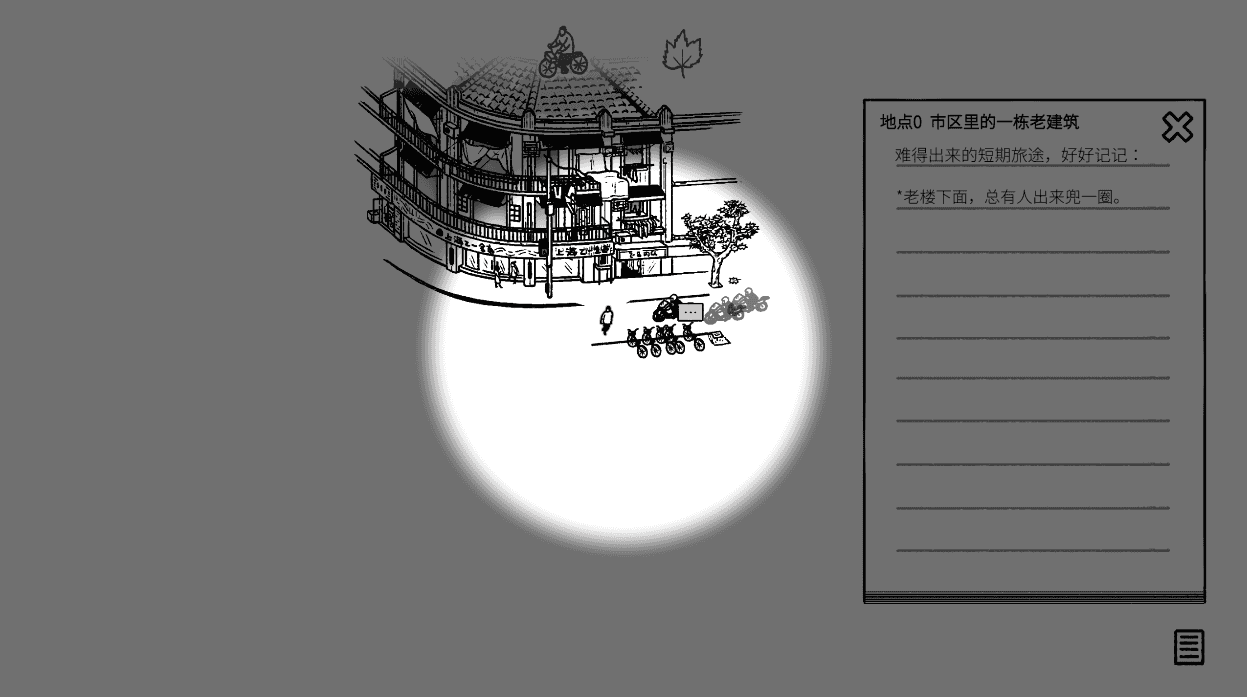
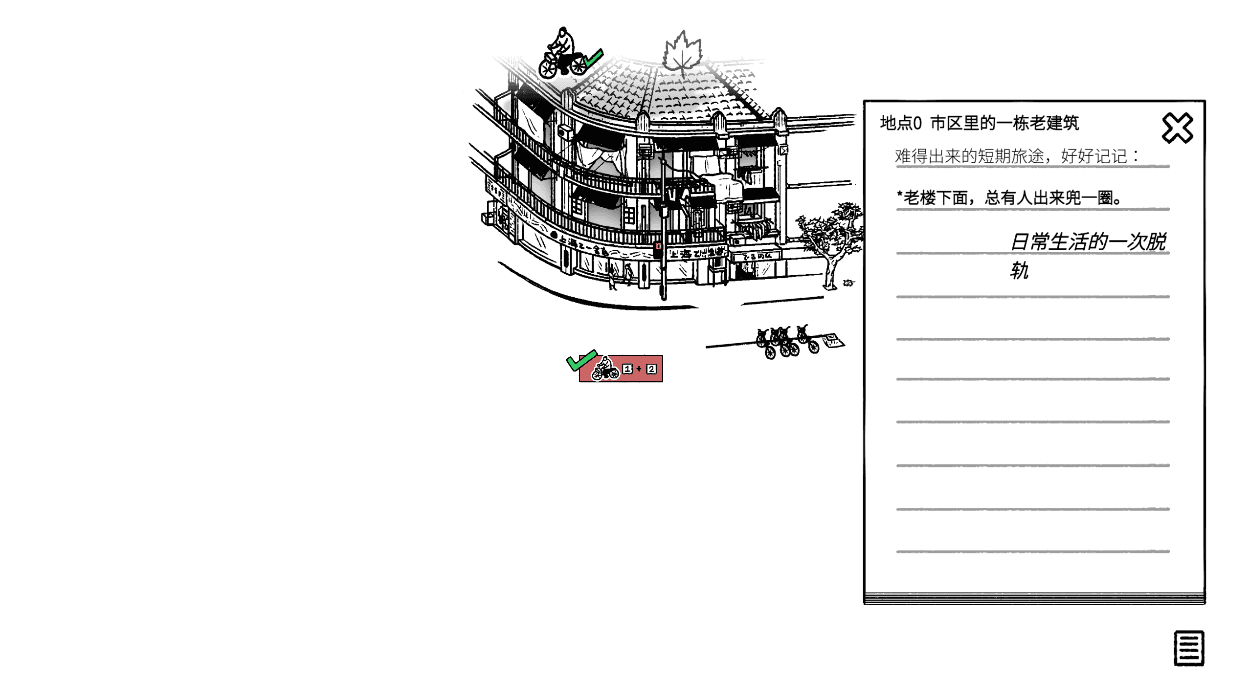
I also reinforced each goal narrative process:
- step1/step2 trigger timing
- black camera movement emphasis
- red outline highlights on key characters after trigger
I fixed another persistent issue too: sometimes clicking UI also clicked/dragged the scene behind it.
As a developer you can “tolerate” that for a while, but once real players touch it, the issue becomes obvious immediately.
I also simplified save and level data structure. Older compatibility ideas had left too many detours. Now I reshaped data around goal descriptions and summaries.
The practical benefit is simple:
I need to keep fewer things in my head while producing new content.
Overall, this period was less “adding flashy new content” and more “paving the road ahead.” It is not as exciting, but without this groundwork, later pain would be much worse.
Invisible but Necessary Repairs (Motivation Chain / Trigger Order)
In March I also spent a lot of time fixing motivation chains and trigger order in levels.
This part is hard to show with images, but it directly determines whether players can follow logic smoothly.
If this layer is broken, players can obtain a goal but still not understand why.
One simple example:
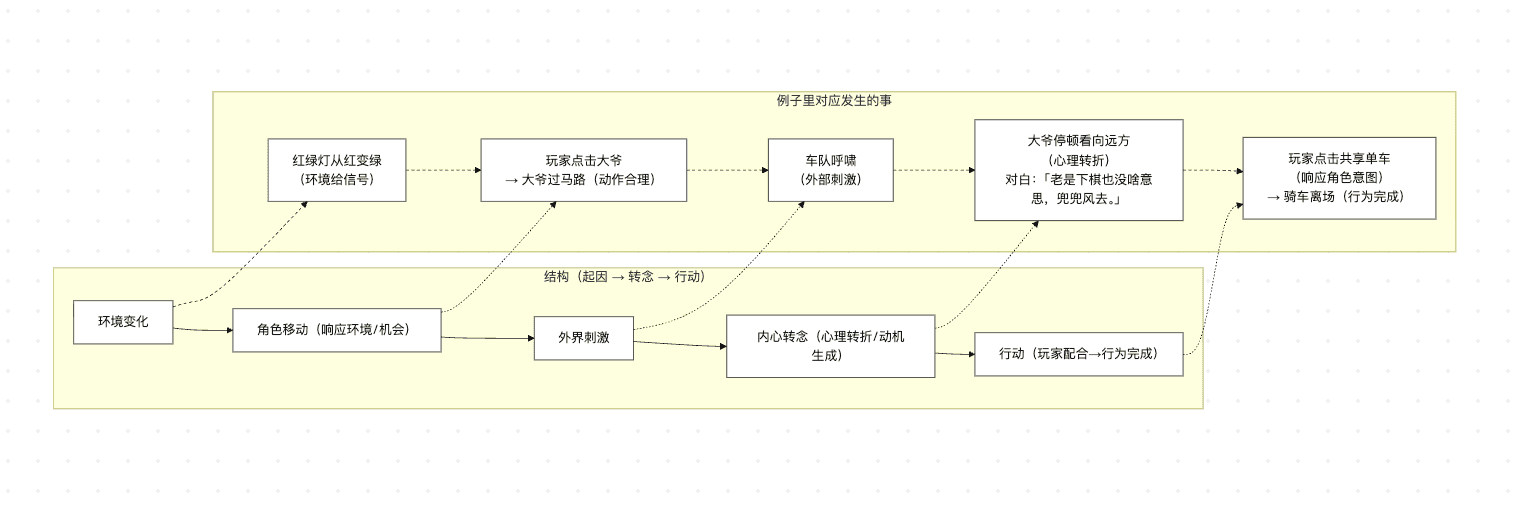
After this cleanup, making new goals became much easier for me. At least each new goal is no longer tripping over old structural issues.
A friend once suggested: test rough drafts first before final drawing to avoid excessive rework.
Now that logic is cleaner, I can finalize text-stage structure first and then draw.
Festival Booth Notes (Writing This Last)
In January I had a booth at a local game festival in Guangzhou.
Because it was a local festival, many visitors were long-time game lovers. The atmosphere was energetic and concentrated.
At first I worried: Small Life is slower and observation-driven. Would it feel too quiet in an event environment and fail to attract players?
Result: turnout was actually good.
A pattern stood out:
- People first watch visuals and character motion
- Then they click a few times
- Very quickly they decide what kind of game this is
If they receive an early “I did it right” signal in the first minute, they usually keep playing.
If they remain uncertain in that first minute, they get pulled away by surrounding noise.
So almost all feedback converged to one point:
Design more carefully for first-time players.
Not by giving direct answers, but by preventing players from being stuck in “Am I misunderstanding this?”
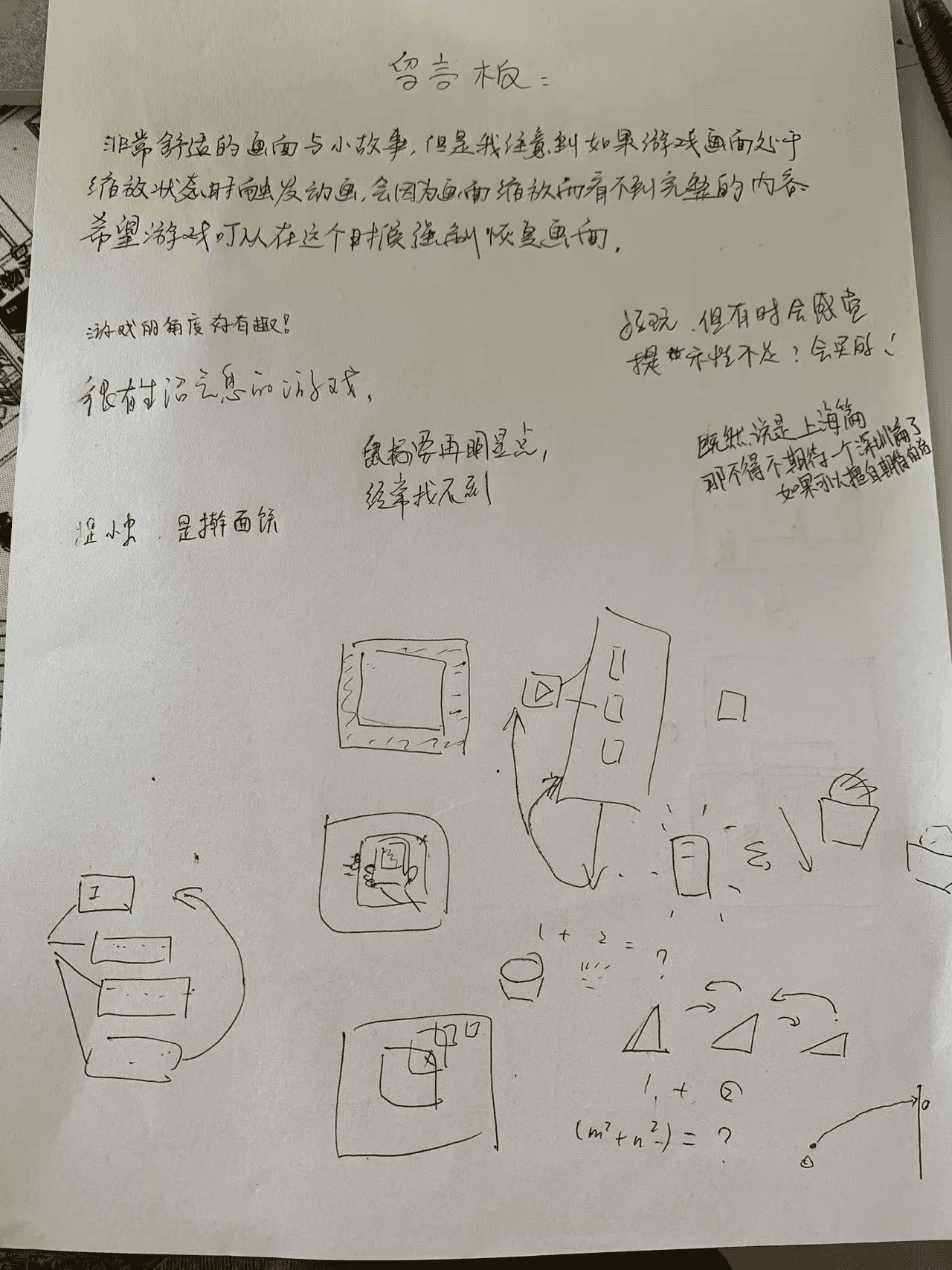
(I also made a message board at the booth. It worked better than expected.)
With agents in my workflow, I feel visible progress again. I am excited to start work every day.
Seeya next time~